


Obesity is defined as a abnormal or excessive accumulation of fat which can be detrimental to health (1). Therefore, some of the main questions surrounding it concern whether obesity is genetic or hereditary.
Among the various methods available for measuring and classifying obesity, the body mass index (BMI) It is the most widely used. BMI is calculated by dividing body weight in kilograms by height in meters squared (kg/m2). This establishes the different degrees of obesity shown in the following table (2):
| Grade 1 | BMI between 30 and 35 kg/m² |
| Grade 2 (Severe Obesity) | BMI between 35 and 40 kg/m² |
| Grade 3 (Morbid Obesity) | BMI greater than 40 kg/m² |
In adults, the World Health Organization (WHO) defines obesity as having a BMI greater than or equal to 30 (1). Progression to obesity involves a change in the characteristics of adipose tissue and the development of chronic low-grade inflammation. This state is characterized by increased levels of free fatty acids in the circulatory system, pro-inflammatory factors, and the activation and infiltration of immune cells at sites of inflammation (3). Furthermore, obesity is often accompanied by a specific profile of dyslipidemia, which is defined as a metabolic abnormality that causes an increase in circulating concentrations of cholesterol and triglycerides in the blood, being one of the main risk factors for developing ischemic heart disease (4, 5).
Obesity in numbers
According to WHO data, obesity has almost tripled worldwide since 1975. Furthermore, according to their most recent estimates, in 2016, more than 650 million adults aged 18 and over were obese, representing 13% of the world's population in that age group.
The majority of the world's population lives in countries where overweight and obesity claim more lives than underweight, which is how BMI below what is considered healthy is defined.
Regarding childhood obesity, in 2016, the WHO reported that 41 million children under five years of age were overweight or obese. That same year, there were more than 340 million overweight or obese children and adolescents (aged 5 to 19) (1).
As an illustrative example of the increase in obesity in developed countries, we show a graph taken from a study conducted in the United States population (Figure 1), where, from 1999-2000 to 2017-2018, the prevalence of obesity increased from 30.5% to 42.4%, and the prevalence of severe obesity increased from 4.7% to 9.2% (15).
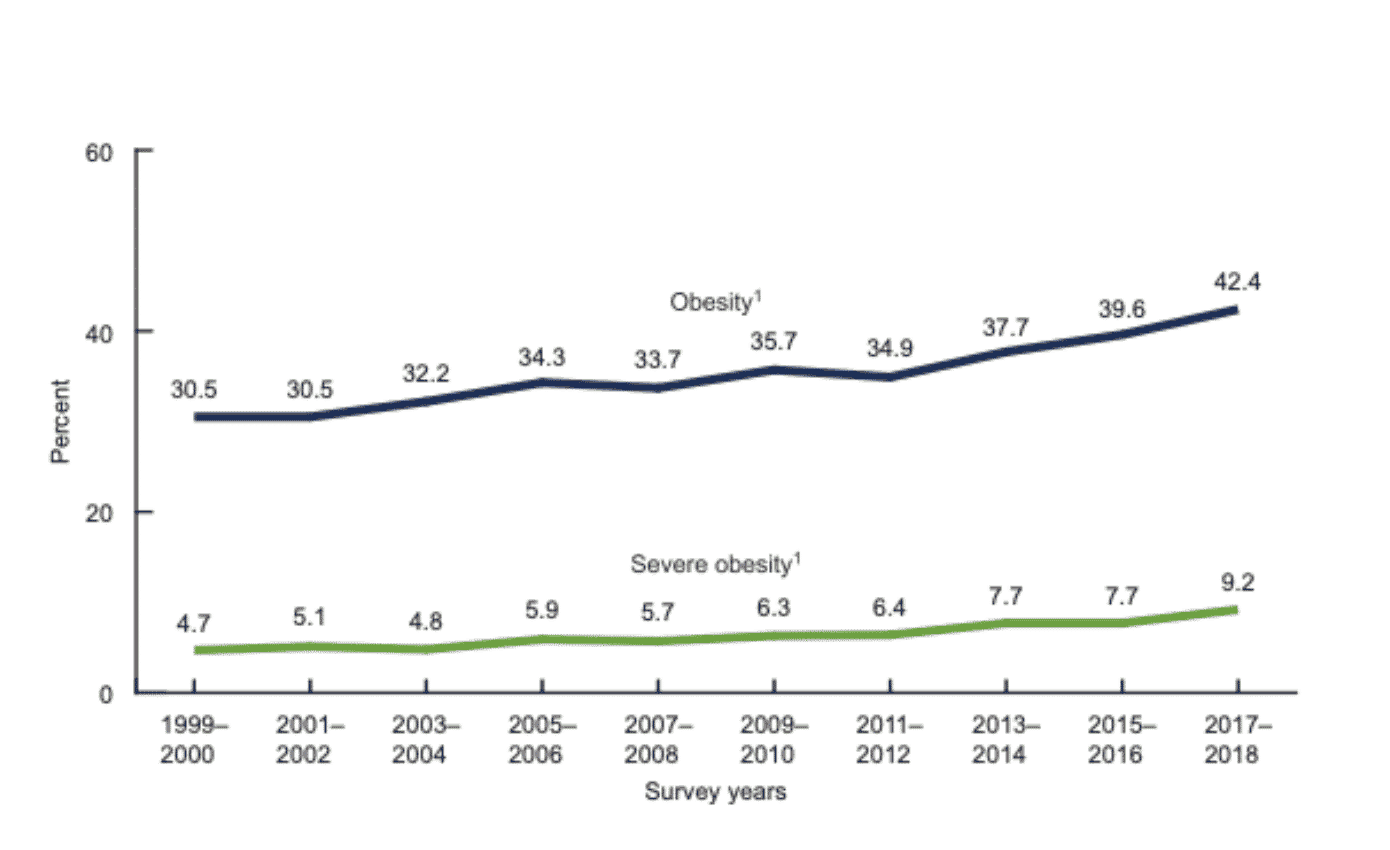
Figure 1. Trends in age-adjusted obesity and the prevalence of severe obesity among adults aged 20 years and over: United States, from 1999-2000 to 2017-2018. (15)
Risks associated with obesity
Patients with obesity are at high risk of developing a number of conditions that can significantly affect their daily lives, as well as increase the risk of mortality (3), including the following:
- Cardiovascular diseases, such as coronary heart disease, heart failure, hypertension, stroke, atrial fibrillation and sudden cardiac death (6).
- Gastrointestinal disorders, These include gastroesophageal reflux disease, functional dyspepsia, irritable bowel syndrome, diverticulosis, inflammatory bowel disease, pancreatitis, and gastrointestinal cancer. Furthermore, obesity can negatively influence the response to specific treatments for gastrointestinal disorders (7).
- Type 2 diabetes, especially when obesity occurs in childhood and adolescence, increasing the risk of developing type 2 diabetes in young people and young adults (8).
- Musculoskeletal disorders. The impact will depend on the degree of obesity. The main problem in this regard lies in the strain it places on the musculoskeletal system over time, primarily resulting in bone and muscle deformities and weakening (3). Among the possible resulting conditions are osteoarthritis, lower back pain, osteoporosis, and rheumatoid arthritis (9).
- Respiratory problems, by causing changes in the mechanics of the lungs and chest wall, changes that in turn cause asthma and asthma-like symptoms, such as dyspnea or wheezing (10).
- Psychological problems. Specifically, there is a reciprocal relationship between depression and obesity. Obesity increases the risk of depression, and depression can predict the development of obesity (11). Furthermore, there are numerous pathways that connect stress and obesity (12).
- Cancer. Obesity is a risk factor for several types of cancer, including breast, colon, endometrial, ovarian, pancreatic, liver, and gastric cancer. Obese cancer patients generally have a worse prognosis, a poorer response to standard treatments, and are more likely to develop metastatic disease than people of normal weight (13).
- COVID-19. Multiple scientific studies have observed that people with obesity have a higher risk of suffering from severe COVID-19 and dying from this cause (14).
Causes
Obesity is a multifactorial disease, which can be caused by an energy imbalance, some genetic or endocrine medical conditions, or certain medications.
- A energy imbalance This means that the amount of calories (energy) obtained from food and beverages is different from the amount of calories the body uses. When more calories are ingested than used, the body stores fat, which over time leads to the development of obesity (16).
- Regarding the relationship between genetics and obesity, It has been shown that several syndromes of genetic origin are associated with developing obesity. Among them are Prader-Willi syndrome and Bardet-Biedl syndrome (17,18).
- Regarding endocrine disorders, the following should be noted:
- Hypothyroidism, Although a causal relationship may be controversial, since, while it is clear that hypothyroidism is associated with weight gain, in recent years studies have been carried out that indicate that changes in thyroid-stimulating hormone could be secondary to obesity (19).
- Cushing's syndrome, disorder caused by a hormonal imbalance that is primarily characterized by an excess of cortisol (16).
- Some tumors, such as craniopharyngioma, which can lead to severe obesity when they develop near parts of the brain that control hunger (16).
- And finally, obesity can be caused by side effects of some medications, such as corticosteroids, antihypertensives, antihyperglycemics or antidepressants (20).
Risk factors
Risk factors associated with obesity may include non-genetic or environmental, such as physical inactivity, age, poor eating habits, or even lack of sleep; and genetics, mainly due to certain genetic mutations that occur in genes related to metabolism (21, 22).
A growing body of evidence links gene-environment interactions to this pathology, thus confirming the genetic-obesity relationship. Numerous studies have revealed that genetic factors influence changes in BMI by between 40% and 70% (23). Furthermore, several dietary intervention studies demonstrate the relationship between the metabolic response to low-calorie diets and various genetic variants, especially those related to obesity, type 2 diabetes, metabolism, and food preferences. The results obtained in these studies tend to support precision dietary interventions that take into account individuals' genetic predispositions.
Prevention
Most cases of obesity and related health conditions are preventable. The WHO's recommendations in this area are as follows: limit energy intake from fats and sugars; increase consumption of fruits, vegetables, legumes, whole grains, and nuts; and engage in regular physical activity (1). Beyond these recommendations, preventive measures can vary considerably depending on the degree of obesity, predisposition, and causes of obesity, especially in cases with a genetic component.
Zogen and obesity
When it comes to maintaining a balanced diet, it is very important to consider each person's individual needs. nutrigenetics, Genetic engineering, defined as the discipline that studies the response to nutrition based on each genotype, is fundamental for taking these particularities into account. With the test nutrigenetic of zogen, is It is possible to study, for each person, the predisposition to lose weight, the greater or lesser effectiveness of various types of diets and other factors related to eating, such as tendencies towards emotional eating, snacking or the consumption of sweets, among many other data.
Furthermore, the Sport is the other key factor in preventing and combating obesity. To get the most out of training, it's necessary to plan it intelligently, based on an understanding of our abilities and limitations. sports test of Zogen provides information on cardiovascular, metabolic, and muscular profiles, as well as injury risk. This information, along with professional guidance, can help you define an optimal exercise routine.
Literature
- Obesity and overweight [Internet]. [cited 2022 Feb 17]. Available from: https://www.who.int/es/news-room/fact-sheets/detail/obesity-and-overweight
- Meldrum DR, Morris MA, Gambone JC. Obesity pandemic: causes, consequences, and solutions-but do we have the will? Fertility and sterility [Internet]. 2017 Apr 1 [cited 2022 Feb 18];107(4):833–9. Available from: https://pubmed.ncbi.nlm.nih.gov/28292617/
- Fruh SM. Obesity: Risk factors, complications, and strategies for sustainable long-term weight management. Journal of the American Association of Nurse Practitioners [Internet]. 2017 Oct 1 [cited 2022 Feb 17];29(Suppl 1):S3. Available from: /pmc/articles/PMC6088226/
- Trautwein EA, McKay S. The Role of Specific Components of a Plant-Based Diet in Management of Dyslipidemia and the Impact on Cardiovascular Risk. Nutrients [Internet]. 2020 Sep 1 [cited 2022 Feb 17];12(9):1–21. Available from: /pmc/articles/PMC7551487/
- Musunuru K. Atherogenic Dyslipidemia: Cardiovascular Risk and Dietary Intervention. Lipids [Internet]. 2010 Oct [cited 2022 Feb 17];45(10):907. Available from: /pmc/articles/PMC2950930/
- Koliaki C, Liatis S, Kokkinos A. Obesity and cardiovascular disease: revisiting an old relationship. Metabolism: clinical and experimental [Internet]. 2019 Mar 1 [cited 2022 Feb 17];92:98–107. Available from: https://pubmed.ncbi.nlm.nih.gov/30399375/
- Emerenziani S, Guarino MPL, Asensio LMT, Altomare A, Ribolsi M, Balestrieri P, et al. Role of Overweight and Obesity in Gastrointestinal Disease. Nutrients [Internet]. 2020 Jan 1 [cited 2022 Feb 17];12(1). Available from: /pmc/articles/PMC7019431/
- Room L, Pontiroli AE. Prevention of Diabetes and Cardiovascular Disease in Obesity. International Journal of Molecular Sciences [Internet]. 2020 Nov 1 [cited 2022 Feb 18];21(21):1–17. Available from: /pmc/articles/PMC7663329/
- Anandacoomarasamy A, Caterson I, Sambrook P, Fransen M, March L. The impact of obesity on the musculoskeletal system. International Journal of Obesity 2008 32:2 [Internet]. 2007 Sep 11 [cited 2022 Feb 22];32(2):211–22. Available from:https://www.nature.com/articles/0803715
- Dixon AE, Peters U. The effect of obesity on lung function. Expert review of respiratory medicine [Internet]. 2018 Sep 2 [cited 2022 Feb 18];12(9):755–67. Available from: https://pubmed.ncbi.nlm.nih.gov/30056777/
- Luppino FS, de Wit LM, Bouvy PF, Stijnen T, Cuijpers P, Penninx BWJH, et al. Overweight, obesity, and depression: a systematic review and meta-analysis of longitudinal studies. Archives of general psychiatry [Internet]. 2010 Mar [cited 2022 Feb 18];67(3):220–9. Available from: https://pubmed.ncbi.nlm.nih.gov/20194822/
- Tomiyama AJ. Stress and Obesity. Annual review of psychology [Internet]. 2019 Jan 4 [cited 2022 Feb 18];70:703–18. Available from: https://pubmed.ncbi.nlm.nih.gov/29927688/
- O'Flanagan CH, Bowers LW, Hursting SD. A weighty problem: metabolic perturbations and the obesity-cancer link. Hormone molecular biology and clinical investigation [Internet]. 2015 Aug 1 [cited 2022 Feb 21];23(2):47–57. Available from: https://pubmed.ncbi.nlm.nih.gov/26167982/
- Mohammad S, Aziz R, al Mahri S, Malik SS, Haji E, Khan AH, et al. Obesity and COVID-19: what makes obese host so vulnerable? Immunity and Aging. 2021 Dec 1;18(1).
- Hales CM, Carroll MD, Fryar CD, Ogden CL. Prevalence of Obesity and Severe Obesity Among Adults: United States, 2017-2018 Key findings Data from the National Health and Nutrition Examination Survey. 2017 [cited 2022 Feb 21]; Available from: https://www.cdc.gov/nchs/products/index.htm.
- Overweight and Obesity | NHLBI, NIH [Internet]. [cited 2022 Feb 18]. Available from: https://www.nhlbi.nih.gov/health-topics/overweight-and-obesity
- Forsythe E, Beales PL. Bardet-Biedl syndrome. European journal of human genetics: EJHG [Internet]. 2013 Jan [cited 2022 Feb 18];21(1):8–13. Available from: https://pubmed.ncbi.nlm.nih.gov/22713813/
- Tan Q, Orsso CE, Deehan EC, Triador L, Field CJ, Tun HM, et al. Current and emerging therapies for managing hyperphagia and obesity in Prader-Willi syndrome: A narrative review. Obesity reviews: an official journal of the International Association for the Study of Obesity [Internet]. 2020 May 1 [cited 2022 Feb 18];21(5). Available from: https://pubmed.ncbi.nlm.nih.gov/31889409/
- Sanyal D, Raychaudhuri M. Hypothyroidism and obesity: An intriguing link. Indian journal of endocrinology and metabolism [Internet]. 2016 Jul 1 [cited 2022 Feb 18];20(4):554–7. Available from: https://pubmed.ncbi.nlm.nih.gov/27366725/
- Wharton S, Raiber L, Serodio KJ, Lee J, Christensen RAG. Medications that cause weight gain and alternatives in Canada: a narrative review. Diabetes, Metabolic Syndrome and Obesity: Targets and Therapy [Internet]. 2018 [cited 2022 Feb 18];11:427. Available from: /pmc/articles/PMC6109660/
- Heianza Y, Qi L. Gene-Diet Interaction and Precision Nutrition in Obesity. International journal of molecular sciences [Internet]. 2017 Apr 7 [cited 2022 Feb 18];18(4). Available from: https://pubmed.ncbi.nlm.nih.gov/28387720/
- Hanson JA, Huecker MR. Sleep Deprivation. StatPearls [Internet]. 2022 [cited 2022 Feb 18]; Available from: https://pubmed.ncbi.nlm.nih.gov/31613456/
- Willer CJ, Speliotes EK, Loos RJF, Li S, Lindgren CM, Heid IM, et al. Six new loci associated with body mass index highlight a neuronal influence on body weight regulation. Nature genetics [Internet]. 2009 Jan [cited 2022 Feb 21];41(1):25. Available from: /pmc/articles/PMC2695662/