
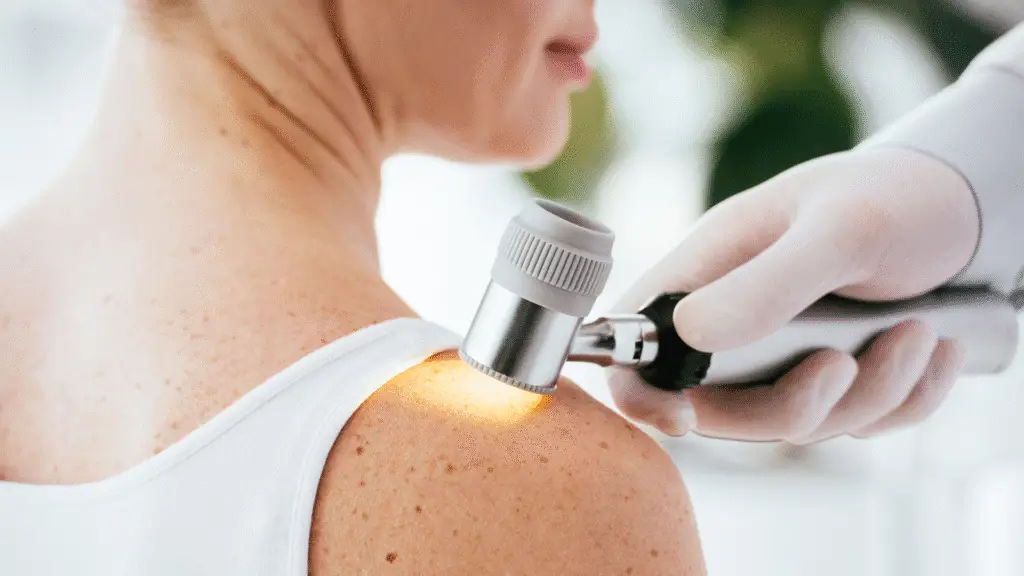
Every May 23, doctors, patients, and health organizations around the world come together to commemorate the World Melanoma Day, A day dedicated to raising awareness about the importance of early detection and advances in treatment. Melanoma, although it represents approximately 1% of skin cancers, is responsible for the majority of deaths related to this disease due to its ability to spread rapidly to other organs.
On this date, it is essential to remember that May 23rd, World Melanoma Day, provides an opportunity to disseminate valuable information for both healthcare professionals and patients. Below, we explore why prevention, early diagnosis, and personalized therapies make all the difference in the prognosis of this cancer.
A complex enemy: what makes melanoma so aggressive?
Melanoma originates in melanocytes, the cells that produce melanin, the pigment that gives skin its color. When genetic mutations disrupt the growth cycle of these cells, tumors can form that are capable of invading tissues and spreading to distant sites.
Although intense sun exposure and childhood sunburns are known risk factors, today we know that up to 40% of familial melanoma cases They are linked to inherited mutations in the gene CDKN2A(cyclin-dependent kinase inhibitor 2A), which can increase the risk of developing the disease by up to 70% over a lifetime Frontiers. Identifying these genetic variants in patients and their relatives allows for the design of more tailored surveillance protocols and prevention strategies.
Prevention and detection: the keys that save lives
The best weapon against melanoma remains the early detection. When diagnosed at an early stage (tumor limited to the skin), the cure rate exceeds 90%. Therefore, both doctors and patients should:
- Perform monthly self-examinations of moles and spots, applying the "ABCDE" rule (Asymmetry, Irregular borders, Varied color, Diameter greater than 6 mm, Evolution of the lesion).
- Schedule annual dermatological check-ups, or semi-annual check-ups if there is a family history or risk factors.
- Use continuous sun protection: creams with SPF ≥ 30, long-sleeved clothing and a hat during peak UV radiation hours.
These simple gestures can be the difference between an early diagnosis and a late, much more complex treatment.
Precision medicine: transforming melanoma treatment
In the last decade, the immunotherapy has revolutionized the management of advanced melanoma. The clinical trial CheckMate 067 demonstrated that the combination of two antibodies—nivolumab and ipilimumab—achieves a global survival of up to 43 % at 10 years, compared to 19 % with ipilimumab alone Bristol Myers Squibb NewsNew England Journal of Medicine. These data, presented at ESMO 2024 and published in The New England Journal of Medicine, They highlight the curative potential of immune checkpoint blockade therapies in patients with metastatic melanoma.
Furthermore, genomic testing allows us to go one step further:
- Molecular profile of the tumor: detect mutations in BRAF, NRAS or c-KIT that indicate the viability of targeted therapies.
- Response biomarkers: measuring tumor mutational burden (TMB) or microsatellite instability (MSI) to predict the effectiveness of immunotherapy.
- Customized planning: combine immunological, targeted and conventional treatments according to the particular biology of each tumor.
At Zogen, we facilitate access to these analyses, working hand in hand with leading international laboratories. Understanding the genomic profile not only guides treatment decisions but also prevents patients from undergoing treatments with a low probability of success and high adverse effects.
The value of genetic counseling
When the CDKN2A mutation or other high-penetrance variants are present, not only does the patient require a stricter follow-up plan: their immediate family They can also benefit from genetic testing. Timely diagnosis in asymptomatic individuals allows for:
- Start regular dermatological check-ups and imaging studies.
- Adopt reinforced preventive measures (strict photoprotection, reduction of risk exposures).
- Consider prophylactic interventions or chemoprevention in specific circumstances.
If you or a family member have received a diagnosis, contact us, We are with you.